Paper-based work instructions / production documentation rarely fail in obvious ways. They don’t trigger alarms, crash systems, or show up clearly on a balance sheet. Instead, they quietly undermine quality, efficiency, and margin—one handwritten note, invalid quality data or a missing revision.
In many manufacturing environments, paper and Excel is still trusted as the backbone of production management. But as product complexity increases and margins tighten, these manual processes begin to reveal their true cost. Undocumented rework goes unaccounted for, real downtime is obscured, tribal knowledge lives in people’s heads, and audits become exercises in damage control rather than proof of control.
What makes paper-based systems especially dangerous is their invisibility. The losses they create are fragmented across quality, operations, and compliance, making them easy to dismiss and hard to measure. By the time issues surface, the root cause is often buried in paperwork or incosistant records.
This series explores how paper-based build packs silently erode performance—and why modern manufacturers are rethinking this approach to protect both quality and margin.
The True Cost of Undocumented Rework
Undocumented rework is one of the most expensive problems in manufacturing—precisely because it rarely appears in official reports. When build packs rely on paper, rework often gets fixed behind the curtain, bypassing formal logging, approvals, or root-cause tracking. The job gets done, but the cost disappears into the noise of daily operations.
Every undocumented correction consumes labour, materials, and machine time that were never planned or priced in. Over time, these “small fixes” accumulate into significant margin erosion. Because they aren’t recorded consistently, leadership sees stable output while profitability quietly declines.
Paper-based build packs make this problem worse by creating friction around documentation. Operators under pressure to keep lines moving are unlikely to pause and update paperwork, especially when forms are unclear, outdated, or physically inaccessible. The result is a growing gap between what actually happened on the shop floor and what the records say happened.
Without accurate rework data, quality teams can’t identify systemic issues, engineering can’t improve processes, and finance can’t model true cost per unit. What looks like acceptable yield is often masking repeatable, preventable errors.
Undocumented rework doesn’t just increase cost—it removes the opportunity to learn. And when learning stops, the same mistakes quietly repeat, shift after shift.
How Paper Hides Re-work Impacts?
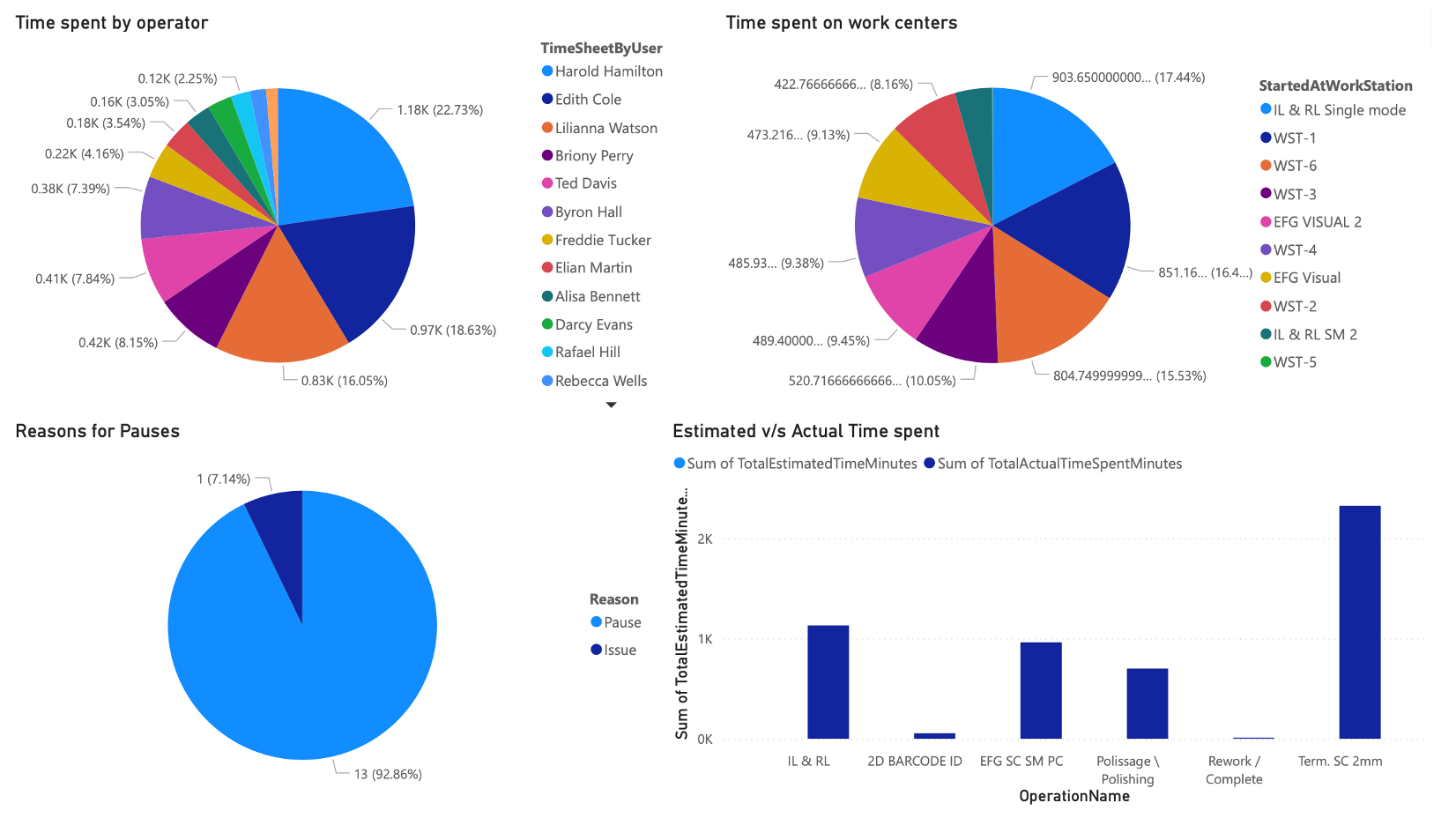
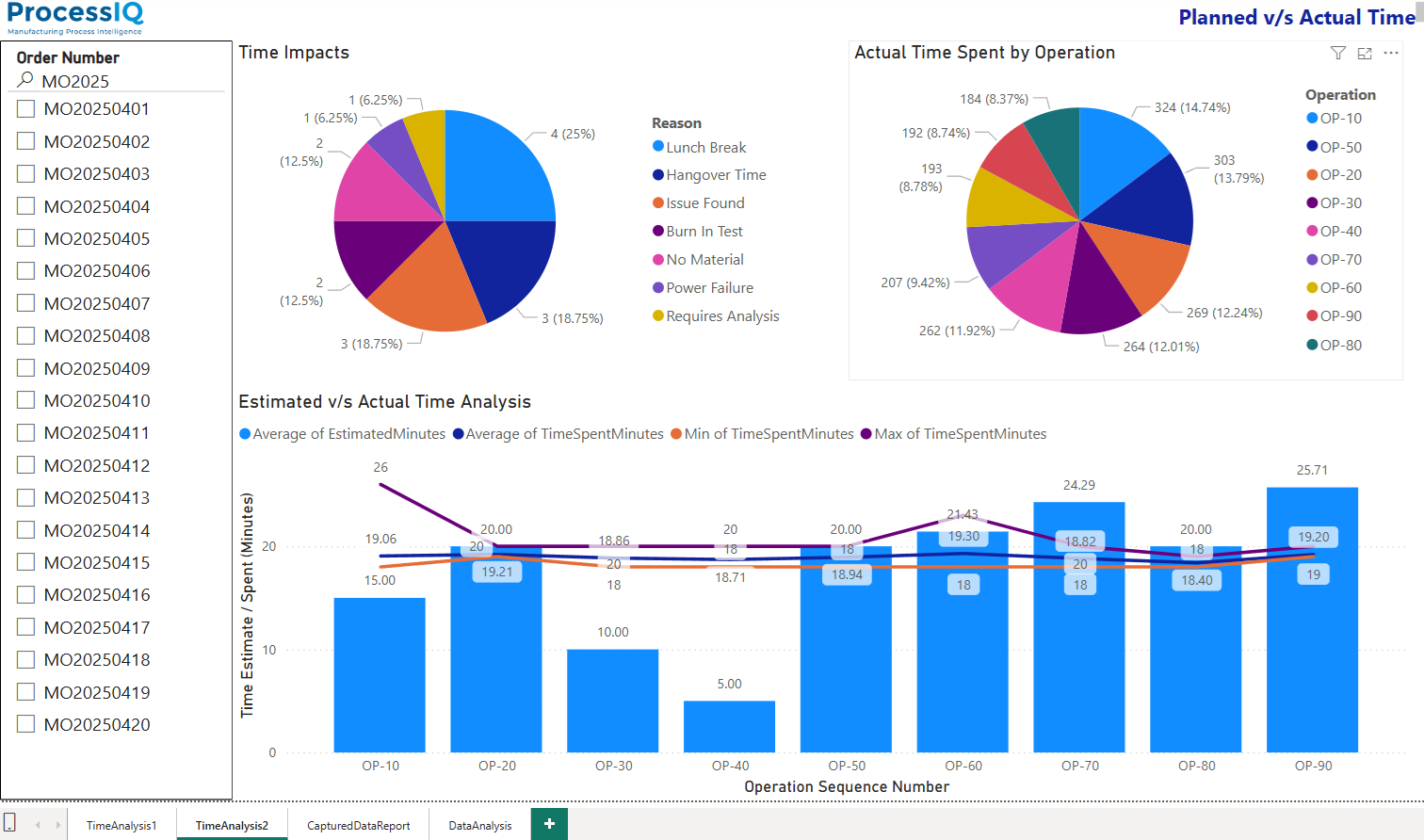
Downtime / re-work are critical metrics in manufacturing—but paper-based build packs are remarkably good at hiding it. When stoppages are logged manually, they’re often estimated after the fact, rounded down, or completed later when things are a little less hectic. What gets recorded is rarely what actually happened on the shop floor.
In reality, downtime & re-work doesn’t occur in neat, reportable blocks. It shows up as short pauses, a machine issue, a quality issue, searching for the right revision, clarifying a discrepancy, or reworking an earlier mistake.
These incidents and the details are incredibly difficult to capture when using paper as a backbone.
Paper build packs separate the act of doing the work from the act of recording it. Under pressure to maintain output, operators naturally prioritise progress over paperwork. Small interruptions go unlogged, and repeated micro-delays become “normal,” even though they steadily reduce throughput and inflate labour cost per unit.
Because the data is incomplete, management sees uptime that looks acceptable while capacity quietly leaks away. Improvement efforts then focus on the wrong constraints, because the true sources of lost time were never visible in the first place.
Why Excel Fails High-Mix Production
Excel works well when processes are stable, predictable, and low in variation. High-mix production is none of those things. As product variants increase and routing paths multiply, spreadsheets quickly become a fragile layer of control held together by manual updates, workarounds, and assumptions.
In high-mix environments, build information changes frequently—revisions, substitutions, customer-specific requirements, and engineering updates are the norm. Excel relies on people to manually propagate these changes across files, tabs, and versions. One missed update is enough to send incorrect instructions to the shop floor, triggering errors that are only discovered after time and materials have already been consumed. The further through the build you are, the larger the impacts.
Spreadsheets also lack context. They can list steps and part numbers, but they can’t enforce sequence, validate completion, or prevent operators from working from outdated data. In practice, Excel becomes a passive reference rather than an active control system—easy to open, easy to ignore, and impossible to audit in real time.
As mix complexity grows, so does the administrative overhead required to keep spreadsheets accurate. Engineering spends more time maintaining files and dealing with poor IT, operations time clarifying instructions, and quality spends time resolving avoidable mistakes. None of this scales.
In high-mix production, Excel doesn’t fail all at once. It fails quietly—through version confusion, delayed updates, and hidden errors that slowly erode throughput, quality, and confidence in the data itself.
When downtime & re-work aren’t accurately captured, it can’t be reduced. Paper doesn’t just fail to measure reaality—it actively disguises it, making systemic inefficiency look like business as usual.
The Risk of Tribal Knowledge
In paper-based environments, critical process knowledge often lives outside the build pack. It exists in people’s heads—passed along through experience, habit, and informal instruction. This “tribal knowledge” keeps production moving, but it also introduces a serious and often underestimated risk.
When operators rely on what they remember rather than what’s documented, consistency disappears. Two people may complete the same task in different ways, both believing they’re correct. On paper, the process looks controlled. In reality, execution varies shift to shift, person to person.
The problem becomes visible when key individuals are unavailable. Absences, role changes, or turnover expose gaps that were never documented because “everyone knows how it’s done.” New or temporary staff struggle, errors increase, and productivity drops—not because the process changed, but because the knowledge was never truly captured.
Paper build packs reinforce the scarce resource dependency by failing to provide clear, enforced guidance. They allow workarounds, assumptions, and memory to substitute for standardised execution. Over time, the organisation becomes resilient to nothing except the presence of specific people.
Tribal knowledge feels efficient—until it isn’t. And when it breaks, it does so suddenly, taking quality, delivery, and confidence with it.
Audit Failures Caused by Paper Trails
Paper-based build packs create the illusion of traceability, but during an audit, that illusion quickly breaks down. Missing signatures, illegible handwriting, outdated revisions, and incomplete records are common—and each one represents a potential non-conformance and impact to quality.
Contemporaneous data is critical!
Auditors don’t just look for evidence that work was done; they look for proof that it was done correctly, consistently, and under controlled conditions. Paper struggles to provide these assurances. Documents are often filled out after the fact, corrected without visibility, or stored in multiple locations with no clear version control. What should be a single source of truth becomes a collection of best endevours.
These risks compounds over time. As paper records accumulate, retrieving the right document becomes slower and less reliable. When evidence can’t be produced quickly, confidence erodes—even if the work itself was done properly. At that point, audit outcomes depend more on paperwork quality than operational performance.
Paper trails also make it difficult to prove process adherence. There’s no reliable way to confirm when steps were completed, in what order, or by whom—only that a box was eventually ticked. For regulated industries, this gap between execution and evidence is increasingly unacceptable.
Audit failures caused by paper aren’t usually due to bad intent or poor workmanship. They’re the result of systems that were never designed to support modern compliance expectations—and they leave organisations exposed to risk long after the audit is over.
Conclusion
Paper-based build packs don’t usually cause dramatic failures. Instead, they slowly and silently impact quality, capacity, and margin through gaps that are easy to overlook and hard to quantify. Undocumented rework, hidden downtime, spreadsheet fragility, tribal knowledge, and weak audit trails all share the same root cause: a system that records activity after the fact instead of controlling it in real time.
As manufacturing complexity increases, these silent failures become more expensive. What once worked at lower volumes or simpler mixes now creates friction, risk, and variability. The result is an operation that appears stable on paper but struggles to improve because the data it relies on is incomplete, delayed, or unreliable.
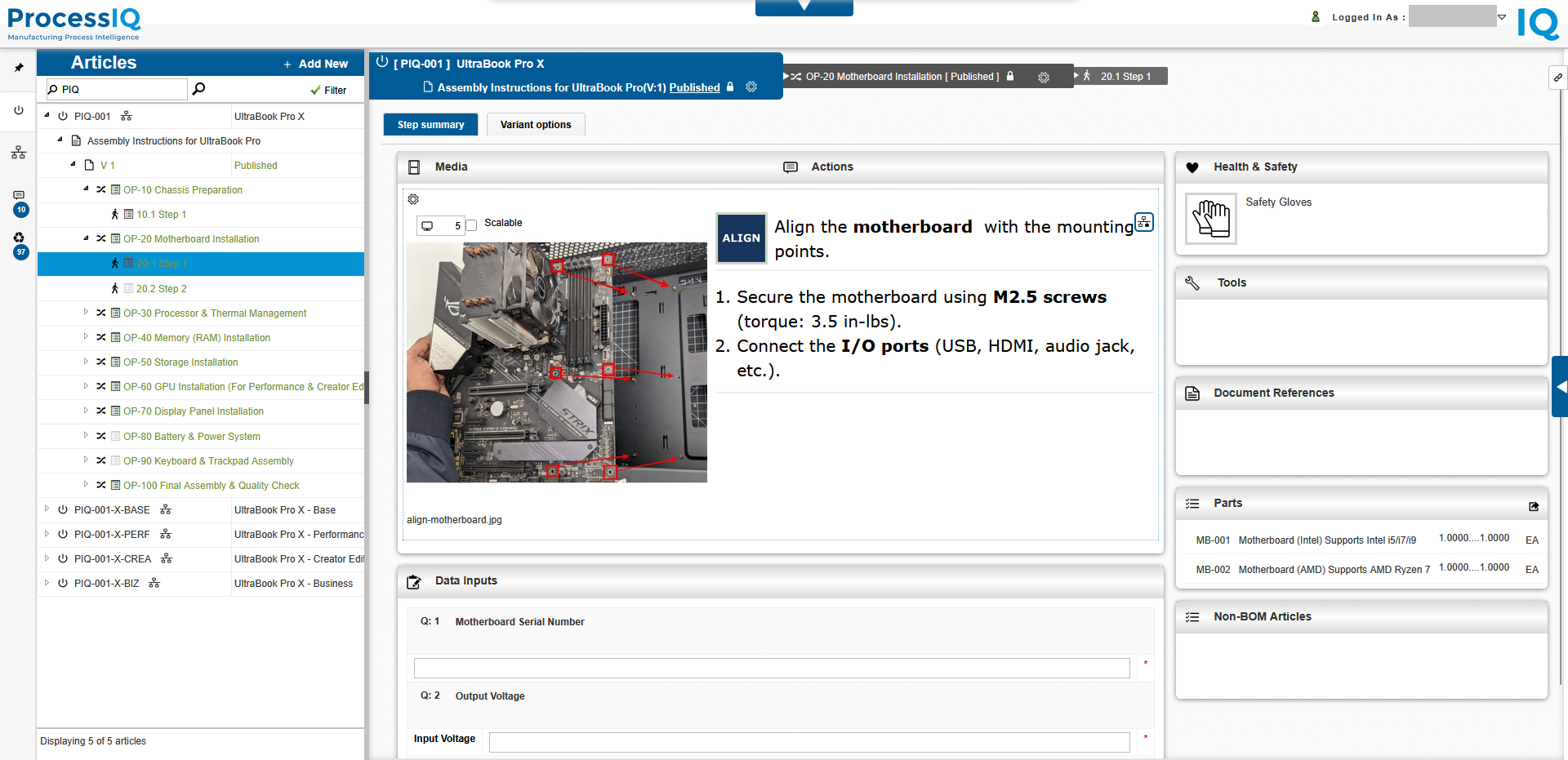
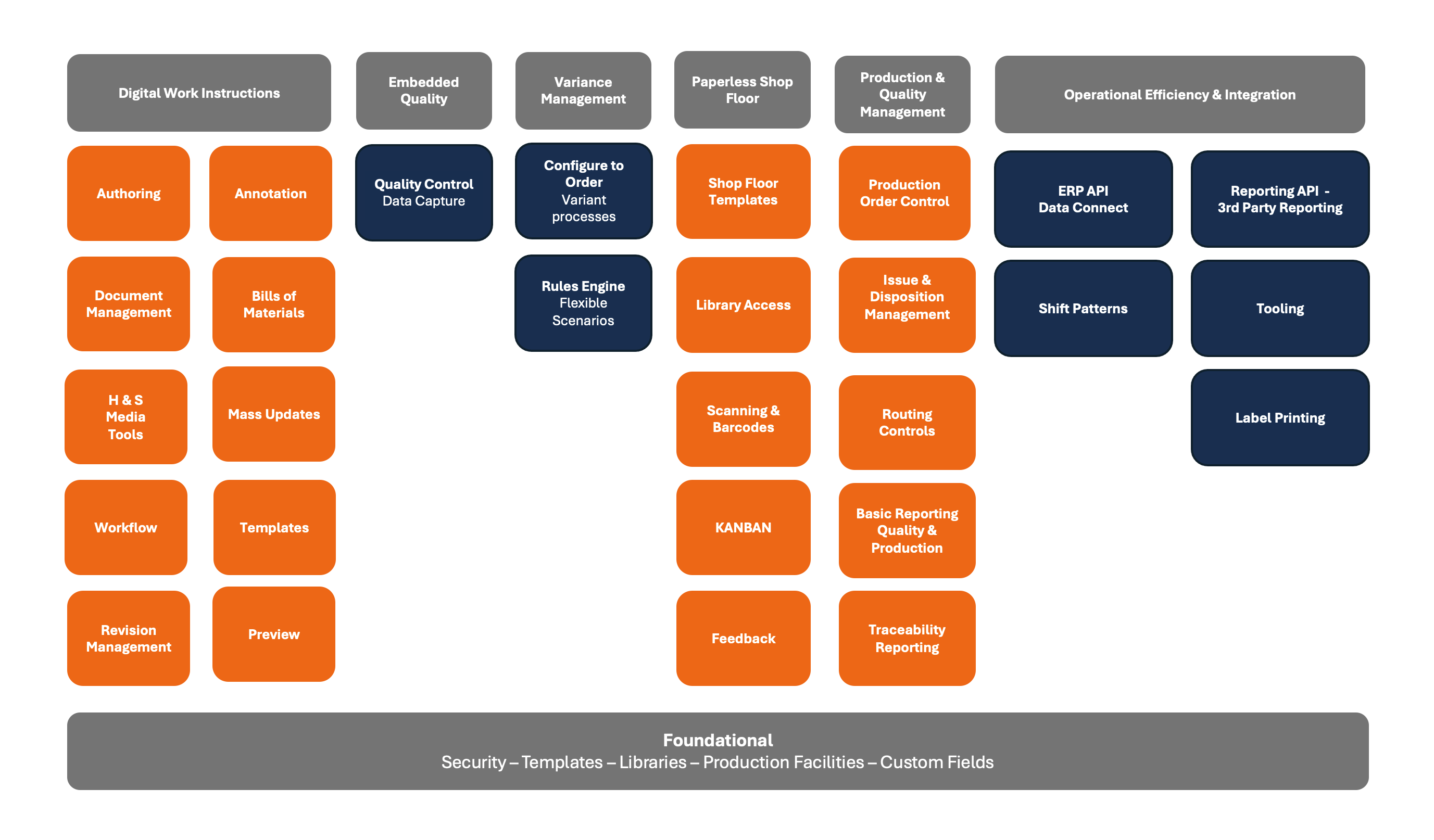
Moving away from paper isn’t about digitising forms for convenience—it’s about restoring visibility and control. When build information is accurate, enforced, and captured at the point of work, problems surface early, learning accelerates, and margins stop leaking unnoticed.
Organisations that protect quality and profitability in the long term are the ones willing to confront what paper can no longer do—and replace it with systems designed and built for manufacturing operations.