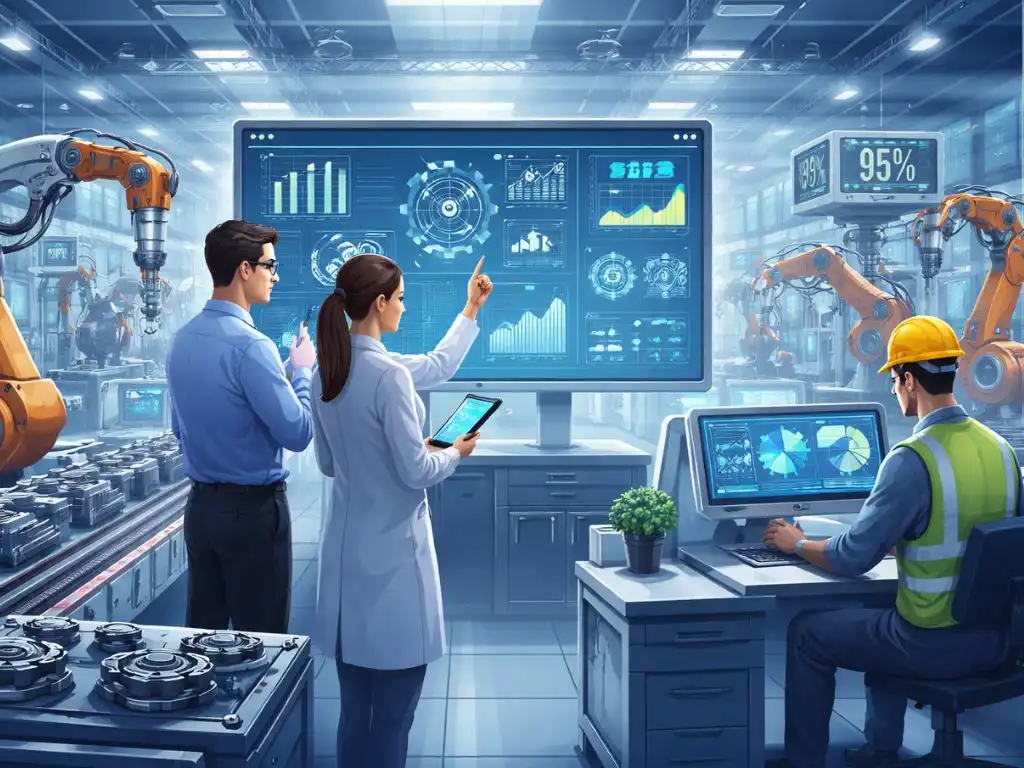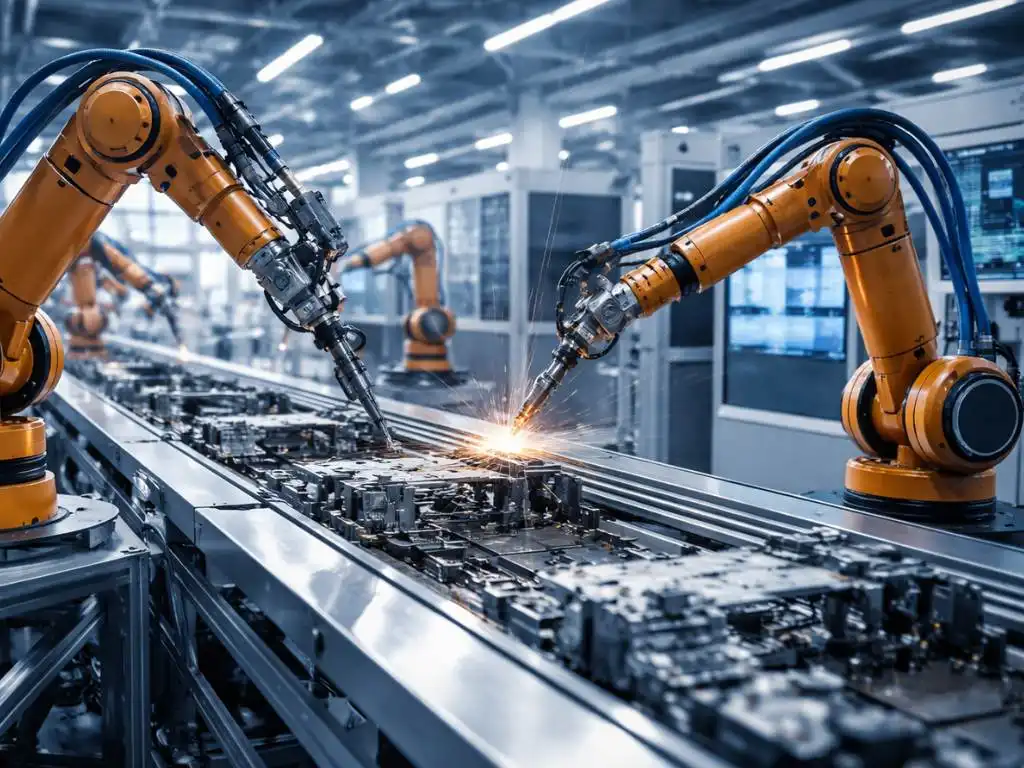
Manufacturers now face increasing pressure to deliver higher-quality products faster, at lower costs, and with greater consistency. Traditional manual processes and disconnected systems often lead to inefficiencies, production delays, and quality issues that impact profitability and customer trust. This is why manufacturing automation has become a critical driver of transformation across modern manufacturing industries.
Manufacturing automation goes beyond robotics and machinery—it integrates digital technologies, data analytics, and intelligent systems to streamline production processes, enhance quality control, and optimize operational performance. When combined with process intelligence platforms like ProcessIQ, automation enables manufacturers to move from reactive problem-solving to proactive, data-driven decision-making.
In this guide, we explore how manufacturing automation improves quality and efficiency, its key benefits, real-world use cases, implementation strategies, and the role of process intelligence in unlocking its full potential.
What Is Manufacturing Automation?
Manufacturing automation refers to the use of technology, software, and control systems to automate manufacturing processes with minimal human intervention. It includes the deployment of robotics, sensors, artificial intelligence (AI), machine learning, industrial IoT (IIoT), and advanced analytics to optimize production workflows.
Automation in manufacturing helps organizations standardise processes, reduce variability, and improve production speed while maintaining consistent quality.
Types of Manufacturing Automation
Fixed Automation
Used in high-volume production environments with repetitive tasks, such as assembly lines.
Programmable Automation
Suitable for batch production, where systems can be reprogrammed for different tasks.
Flexible Automation
Allows rapid adaptation to product changes with minimal downtime.
Intelligent Automation
Combines automation with AI and process intelligence to optimise manufacturing processes dynamically.
Why Manufacturing Automation Is Essential for Modern Manufacturers
Modern manufacturing environments are complex, data-intensive, and highly competitive. Without automation, manufacturers struggle with:
- Manual and error-prone processes
- Quality inconsistencies
- Limited visibility into production performance
- High operational costs
- Slow decision-making
- Compliance and traceability challenges
Manufacturing automation addresses these challenges by enabling real-time monitoring, predictive insights, and continuous optimization across production processes.
How Manufacturing Automation Improves Quality
Real-Time Quality Monitoring
Manufacturing automation enables continuous monitoring of production processes using sensors, IoT devices, and data analytics. Automated quality checks help manufacturers detect deviations from quality standards instantly, reducing the risk of defects.
By integrating automation with process intelligence platforms like ProcessIQ, manufacturers gain a unified view of quality metrics and process performance, enabling faster and more accurate decision-making.
Reduced Human Error
Manual processes are prone to errors, inconsistencies, and variability. Automation standardizes workflows and eliminates repetitive manual tasks, ensuring consistent production quality.
Automated manufacturing systems ensure that quality standards are applied uniformly across production lines, reducing the likelihood of defects caused by human intervention.
Faster Defect Detection and Root Cause Analysis
Traditional quality management systems often identify defects after production is complete. Manufacturing automation, combined with advanced analytics, enables early detection of defects during production.
ProcessIQ enhances this capability by analyzing process data to identify root causes of quality issues, allowing manufacturers to implement targeted corrective actions.
Integration with Quality Management Systems (QMS)
Manufacturing automation integrates seamlessly with quality management systems to automate inspections, audits, and compliance workflows. This ensures that quality processes are aligned with production activities and regulatory requirements.
By connecting automation systems with QMS and process intelligence tools, manufacturers can achieve end-to-end quality visibility and control.
How Manufacturing Automation Improves Efficiency
Faster Production Cycles
Automation accelerates production by eliminating manual bottlenecks and optimizing workflows. Automated systems can operate continuously with minimal downtime, increasing throughput and reducing production cycle times.
Process Optimization and Bottleneck Identification
Manufacturing automation generates large volumes of operational data. When analyzed using process intelligence platforms like ProcessIQ, this data reveals inefficiencies, bottlenecks, and process deviations.
Manufacturers can use these insights to optimize workflows, reduce delays, and improve overall process efficiency.
Resource Optimization
Automation enables manufacturers to optimize the use of labor, materials, and energy. By reducing waste and improving resource utilization, organizations can achieve significant cost savings.
Data-Driven Decision-Making
Manufacturing automation provides real-time insights into production performance, enabling manufacturers to make informed decisions quickly. ProcessIQ enhances this capability by delivering actionable intelligence that connects process data with business outcomes.
Key Benefits of Manufacturing Automation
Implementing manufacturing automation delivers measurable benefits across quality, efficiency, and business performance:
- Improved product quality and consistency
- Increased production efficiency and throughput
- Reduced operational costs and waste
- Enhanced compliance and traceability
- Faster time-to-market
- Scalable manufacturing operations
- Better customer satisfaction and brand reputation
By leveraging automation and process intelligence together, manufacturers can achieve sustainable operational excellence.
Use Cases of Manufacturing Automation
Automotive Manufacturing
Manufacturing automation enables automotive manufacturers to improve precision, reduce defects, and optimize complex assembly processes. ProcessIQ helps identify process inefficiencies that impact quality and production speed.
Electronics Manufacturing
In high-volume electronics production, automation ensures consistent quality and rapid defect detection. ProcessIQ provides real-time insights into process performance and quality metrics.
Pharmaceutical Manufacturing
Automation supports strict regulatory compliance and traceability requirements. ProcessIQ enables pharmaceutical manufacturers to monitor process performance and quality outcomes in real time.
Food and Beverage Manufacturing
Manufacturing automation helps ensure product consistency, safety, and quality. ProcessIQ identifies process variations that affect product quality and efficiency.
Heavy Industry and Metal Manufacturing
Automation optimises production workflows and reduces operational risks. ProcessIQ provides actionable insights into process performance and resource utilisation.
Manufacturing Automation vs Traditional Manufacturing
| Aspect | Traditional Manufacturing | Manufacturing Automation |
|---|---|---|
| Process control | Manual | Automated and data-driven |
| Quality management | Reactive | Proactive and predictive |
| Efficiency | Limited | High and scalable |
| Visibility | Low | Real-time |
| Decision-making | Intuition-based | Data-driven |
Manufacturing automation enables manufacturers to transition from reactive operations to intelligent, optimized production environments.
Role of Process Intelligence in Manufacturing Automation
Why Automation Alone Is Not Enough
While automation improves production speed and consistency, it does not automatically deliver insights into process inefficiencies. Manufacturers need process intelligence to understand how automated systems perform and how processes can be optimised.
How ProcessIQ Enhances Manufacturing Automation
ProcessIQ integrates process data from ERP, MES, QMS, and automation systems to deliver:
- End-to-end process visibility
- Root cause analysis of quality issues
- Real-time performance monitoring
- Continuous process optimization
By combining automation with process intelligence, manufacturers can unlock the full value of digital transformation.
Business Impact of ProcessIQ
With ProcessIQ, manufacturers can:
- Reduce defect rates and rework costs
- Improve production efficiency and throughput
- Enhance compliance and audit readiness
- Accelerate continuous improvement initiatives
How to Implement Manufacturing Automation Successfully
Step 1: Assess Current Processes
Identify manual workflows, inefficiencies, and quality challenges.
Step 2: Identify Automation Opportunities
Prioritize processes with the highest impact on quality and efficiency.
Step 3: Integrate Automation with ERP, MES, and QMS
Ensure seamless data flow across systems.
Step 4: Leverage Process Intelligence
Use ProcessIQ to analyze process data and optimize workflows.
Step 5: Continuously Monitor and Optimize
Adopt a continuous improvement approach to maximize automation benefits.
Challenges of Manufacturing Automation and How to Overcome Them
High Implementation Costs
Start with high-impact processes and scale gradually.
Integration Complexity
Use platforms like ProcessIQ to unify data across systems.
Change Management
Train teams and foster a culture of digital adoption.
Data Silos
Implement process intelligence to connect disparate data sources.
Future of Manufacturing Automation
Manufacturing automation is evolving rapidly with emerging technologies such as:
- AI-driven automation
- Smart factories and digital twins
- Hyperautomation
- Autonomous manufacturing
- Predictive analytics
Manufacturers that adopt automation and process intelligence today will be better positioned to compete in the future of industrial innovation.
FAQs About Manufacturing Automation
What is manufacturing automation?
Manufacturing automation is the use of technology and software to automate production processes, improving quality, efficiency, and consistency.
How does manufacturing automation improve quality?
Automation reduces human error, enables real-time quality monitoring, and supports predictive defect detection.
What are the benefits of manufacturing automation?
Key benefits include improved quality, increased efficiency, reduced costs, enhanced compliance, and scalable operations.
How does ProcessIQ support manufacturing automation?
ProcessIQ connects automation data with process intelligence, enabling manufacturers to optimize workflows and improve quality outcomes.
Conclusion: Accelerate Manufacturing Excellence with ProcessIQ
Manufacturing automation is transforming how manufacturers operate, compete, and innovate. By automating production processes and leveraging process intelligence, organisations can achieve higher quality, greater efficiency, and sustainable growth.
ProcessIQ empowers manufacturers to move beyond traditional automation by delivering real-time process insights and actionable intelligence. With ProcessIQ, manufacturing automation becomes not just a technological upgrade—but a strategic advantage.
If you’re ready to optimise quality, efficiency, and performance, explore how ProcessIQ can transform your manufacturing operations.