The Growing Need for Efficient Manufacturing
In today’s highly competitive industrial environment, manufacturers are under constant pressure to improve productivity while maintaining quality and controlling operational costs. A manufacturing execution system has therefore become an essential solution for organisations seeking better visibility and control over their production processes. However, many factories still rely on manual reporting, disconnected software, and delayed data insights, which can limit efficiency and slow decision-making.
At the same time, digital transformation is reshaping how modern factories operate. Manufacturers increasingly depend on real-time production data to identify inefficiencies, reduce downtime, and optimise resources across the shop floor. Without accurate and timely information, even well-planned operations may experience bottlenecks, quality issues, and unnecessary waste.
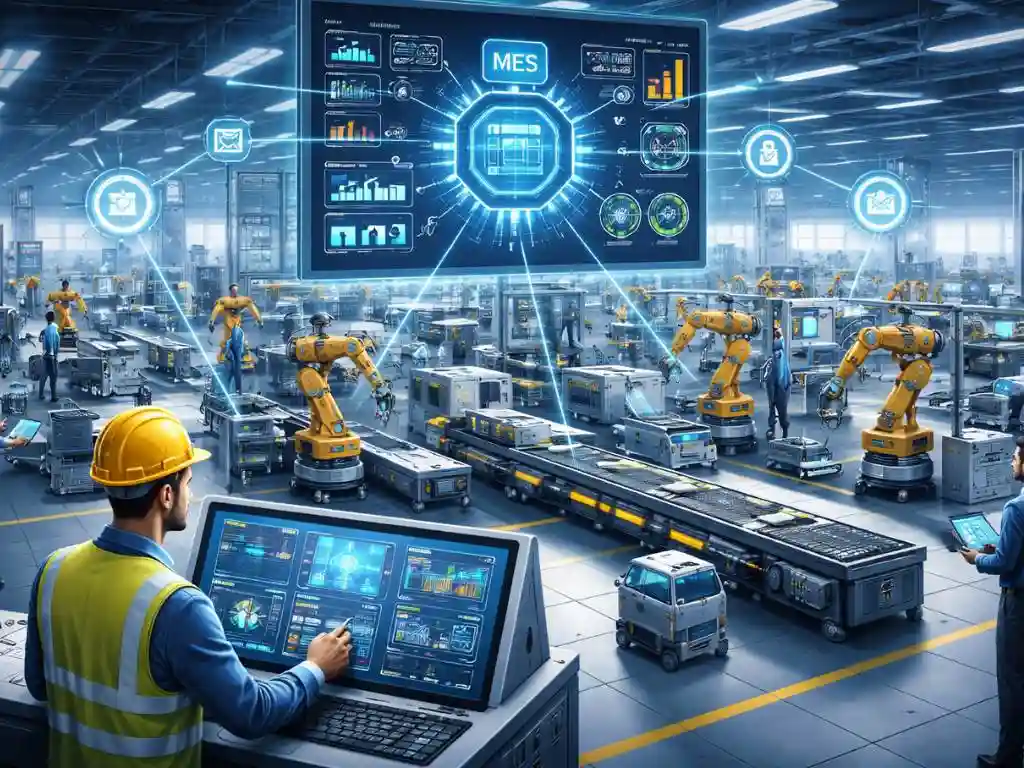
This is where a manufacturing execution system plays a critical role by connecting enterprise planning systems with real-time shop-floor activities. Sometimes referred to as a manufacturing executing system, this technology enables businesses to monitor, control, and continuously improve manufacturing performance using live operational data.
As a result, organisations implementing MES solutions are better positioned to streamline workflows, enhance quality control, and respond quickly to changing production demands. The following sections explore how these systems directly contribute to improved production efficiency and long-term operational success.
What Is a Manufacturing Execution System?
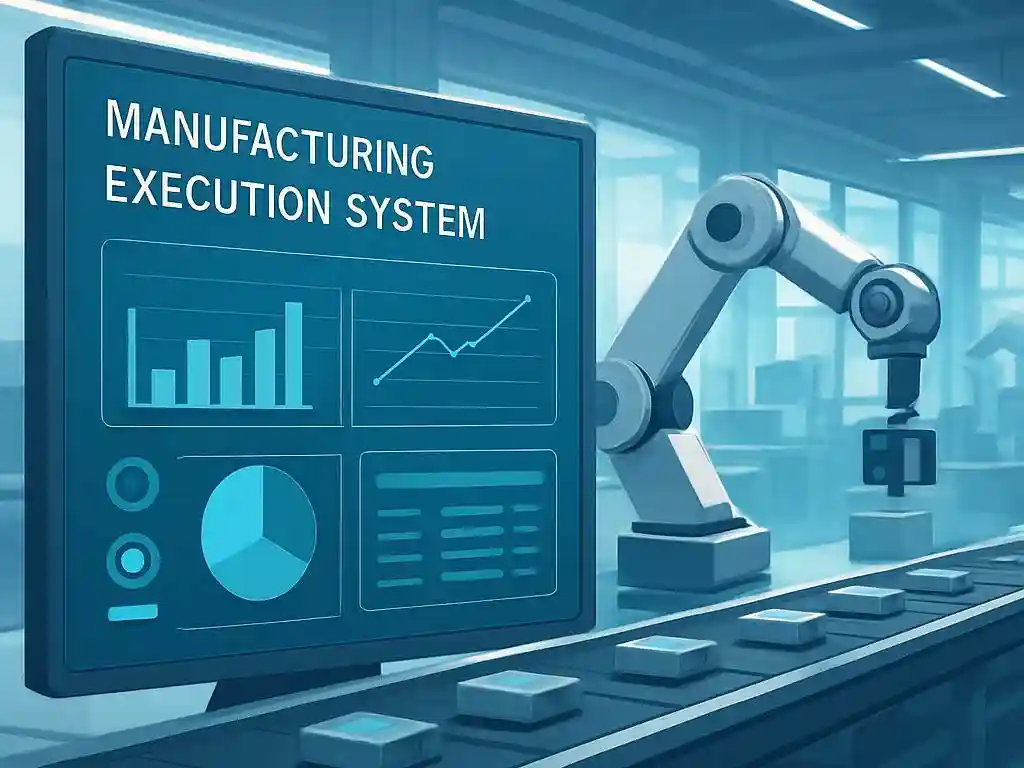
A manufacturing execution system (MES) is a software solution designed to monitor, manage, and optimise production activities on the shop floor in real time. It acts as a critical link between enterprise-level planning systems, such as ERP platforms, and the physical manufacturing process, ensuring that production operations run efficiently and according to plan.
Unlike traditional tracking methods that rely on manual data entry or delayed reporting, an MES collects live data directly from machines, operators, and production lines. This real-time visibility allows manufacturers to track work orders, monitor equipment performance, manage resources, and maintain consistent quality throughout the production cycle. As a result, decision-makers gain accurate insights into what is happening on the factory floor at any given moment.
In some contexts, the term manufacturing executing system is used interchangeably; however, the industry-standard terminology remains manufacturing execution system. Regardless of naming variations, the primary objective remains the same — to improve operational control, reduce inefficiencies, and ensure seamless coordination between planning and execution.
By providing actionable production intelligence, an MES helps manufacturers move from reactive problem-solving to proactive process optimisation, ultimately supporting faster production cycles and improved overall efficiency.
Key Challenges in Production Efficiency Without MES
Before adopting a manufacturing execution system, many manufacturers struggle with operational inefficiencies that limit productivity and increase costs. Although production plans may be well designed, the absence of real-time monitoring and integrated data often creates gaps between planning and actual execution. Consequently, these challenges can slow operations and reduce overall performance.
Lack of Real-Time Visibility
One of the most common issues is limited visibility into shop-floor activities. Production data is often recorded manually or updated at the end of shifts, which means managers cannot respond quickly to emerging problems. As a result, delays and inefficiencies may continue unnoticed for extended periods.
Production Bottlenecks and Downtime
Without accurate live data, identifying bottlenecks becomes difficult. Machines may remain idle, maintenance issues may go undetected, and workflow interruptions can occur frequently. Therefore, production schedules are harder to maintain, leading to missed deadlines and reduced throughput.
Quality Inconsistencies
Manual processes and disconnected systems increase the likelihood of human error. Inconsistent work instructions, limited traceability, and delayed quality checks can result in defects or rework. Over time, this not only affects efficiency but also impacts customer satisfaction and compliance requirements.
Data Silos Across Departments
In many manufacturing environments, production, inventory, and quality data exist in separate systems. Because these systems do not communicate effectively, teams often work with incomplete or outdated information. Consequently, decision-making becomes slower and less reliable.
Limited Data-Driven Decision Making
Without a centralised system collecting and analysing production data, manufacturers rely heavily on assumptions rather than measurable insights. This makes continuous improvement challenging and prevents organisations from optimising resources effectively.
These operational challenges highlight why manufacturers increasingly turn to a manufacturing execution system—sometimes referred to as a manufacturing executing system—to gain real-time control, improve coordination, and enhance overall production efficiency.
How a Manufacturing Execution System Improves Production Efficiency
A manufacturing execution system enhances production efficiency by providing real-time visibility, automation, and data-driven control across the entire shop floor. Instead of relying on delayed reports or manual coordination, manufacturers can monitor operations as they happen and respond immediately to performance issues. As a result, production processes become more streamlined, predictable, and scalable.
Real-Time Production Monitoring
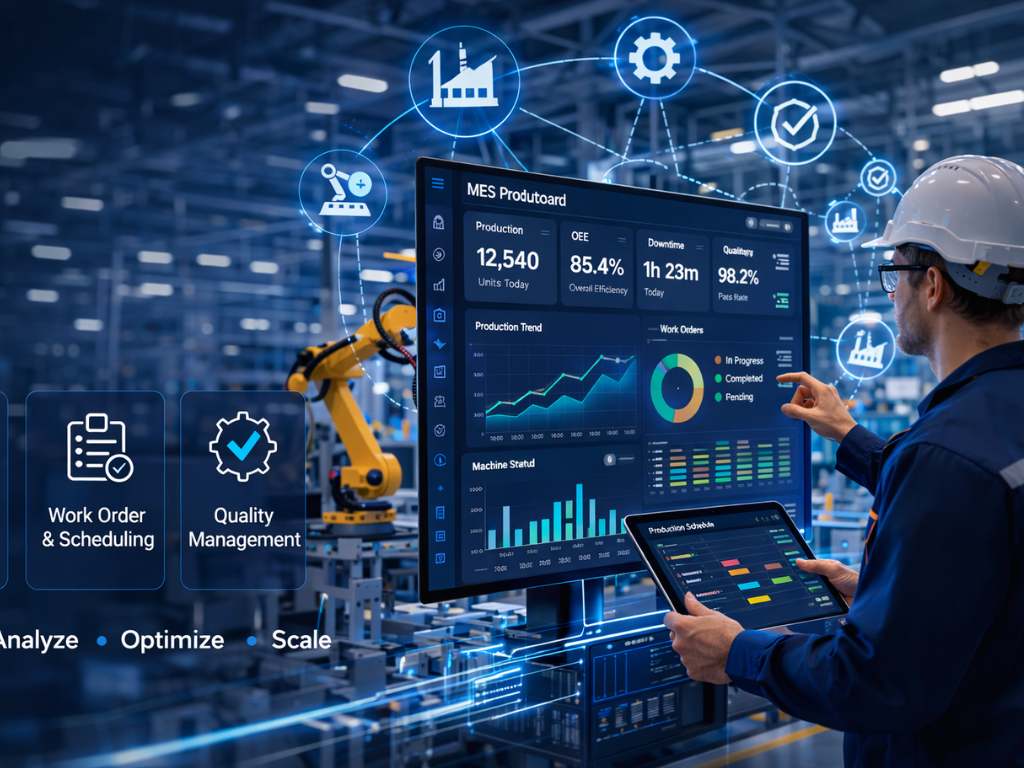
One of the most significant advantages of a manufacturing execution system is real-time monitoring. Production managers can track machine status, work orders, and operator performance through live dashboards. Consequently, problems such as slow cycles or unexpected stoppages can be identified and addressed before they escalate into larger disruptions.
Reduced Downtime and Faster Issue Resolution
Downtime is one of the biggest contributors to lost productivity. An MES detects abnormalities through automated alerts and performance analytics, allowing teams to respond quickly. Therefore, maintenance teams can resolve issues faster, reducing unplanned interruptions and improving equipment availability.
Improved Workflow Automation
Manual processes often create delays and inconsistencies. A manufacturing execution system automates task assignments, digital work instructions, and production tracking, ensuring that operators follow standardised procedures. As a result, workflows become more efficient while reducing dependency on paperwork and manual communication.
Enhanced Quality Control
Quality management becomes more proactive with MES integration. The system records production data at every stage, enabling full traceability and immediate detection of defects. In addition, automated quality checks help maintain consistency, reducing rework and material waste.
Better Resource Utilisation
Efficient use of labour, materials, and equipment is essential for productivity. By analysing real-time data, manufacturers can allocate resources more effectively and balance workloads across production lines. Consequently, idle time decreases while output increases.
Data-Driven Decision Making
A manufacturing execution system transforms raw production data into actionable insights. Managers gain access to performance metrics such as cycle time, throughput, and efficiency trends. Because decisions are based on accurate data rather than assumptions, continuous improvement becomes easier to achieve.
Overall, whether referred to as a manufacturing execution system or a manufacturing executing system, MES technology empowers manufacturers to move from reactive operations to proactive optimisation, ultimately driving measurable improvements in production efficiency.
Core Features That Drive Efficiency Gains
A manufacturing execution system improves production efficiency through a combination of integrated features designed to monitor, control, and optimise shop-floor operations. Rather than functioning as a single tool, an MES acts as a connected platform that brings together production data, workforce activities, and machine performance. As a result, manufacturers gain greater operational transparency and control.
Production Tracking and Scheduling
An MES provides real-time tracking of work orders, production progress, and job status. Managers can monitor whether production is running according to schedule and quickly adjust workflows when delays occur. Consequently, scheduling becomes more accurate, helping reduce idle time and missed deadlines.
Performance Monitoring and Analytics
Advanced dashboards and reporting tools allow manufacturers to measure key performance indicators such as cycle time, throughput, and overall equipment effectiveness (OEE). By analysing these insights, teams can identify inefficiencies and implement continuous improvements more effectively.
Inventory and Material Management
Material shortages often disrupt production flow. A manufacturing execution system tracks material usage and availability throughout the production process, ensuring the right resources are available at the right time. Therefore, manufacturers can minimise waste while maintaining consistent output levels.
Quality Management Integration
Quality control is embedded directly into production workflows. The system records inspection results, monitors compliance requirements, and enables full product traceability. As a result, defects can be detected early, reducing rework and improving overall product consistency.
Shop-Floor Connectivity and Machine Integration
Modern MES platforms connect directly with machines, sensors, and industrial IoT devices. This connectivity enables automatic data collection instead of manual entry, improving accuracy while providing real-time operational insights.
Workforce Management and Digital Instructions
Digital work instructions guide operators through standardised procedures, ensuring consistency across shifts and teams. In addition, performance tracking helps managers allocate labour resources more efficiently, supporting smoother production operations.
Together, these capabilities demonstrate how a manufacturing execution system — sometimes referred to as a manufacturing executing system — creates a connected manufacturing environment where data flows seamlessly, enabling faster decisions and sustained efficiency improvements.
Manufacturing Execution System vs ERP: Understanding the Difference
Although both systems support manufacturing operations, a manufacturing execution system and an Enterprise Resource Planning (ERP) system serve different but complementary purposes. Understanding how they differ helps manufacturers build a more efficient and connected digital infrastructure.
Purpose and Operational Focus
An ERP system focuses primarily on business planning and administrative processes such as finance, procurement, inventory planning, and order management. In contrast, a manufacturing execution system manages what happens on the shop floor, ensuring production activities are executed according to plan in real time.
Simply put, ERP answers “what should happen”, while MES ensures “what is happening right now.”
Level of Data Visibility
ERP platforms typically rely on scheduled updates or manual inputs, meaning production data may not always reflect current conditions. However, a manufacturing execution system collects live data directly from machines and operators, providing immediate visibility into production performance, downtime, and workflow status.
Production Control vs Business Planning
While ERP systems create production schedules and allocate resources at a high level, MES solutions control day-to-day execution. For example:
- ERP generates work orders.
- MES tracks, manages, and optimises those work orders during production.
As a result, manufacturers gain both strategic planning and operational control.
Integration and Collaboration
When integrated together, ERP and MES create a seamless information flow across the organisation. Production updates from MES automatically inform ERP systems, improving forecasting accuracy, inventory management, and reporting. Therefore, decision-makers receive consistent and reliable data across departments.
Why Both Systems Matter
Relying solely on ERP can leave visibility gaps on the shop floor, while using only MES may limit business-level planning insights. Together, they create a balanced ecosystem that supports efficiency, scalability, and continuous improvement.
Whether described as a manufacturing execution system or occasionally as a manufacturing executing system, MES complements ERP by transforming production plans into measurable operational results, ultimately improving overall manufacturing performance.
Real-World Use Cases Across Industries
A manufacturing execution system delivers measurable efficiency improvements across a wide range of manufacturing environments. While production processes vary between industries, the need for real-time visibility, quality control, and operational coordination remains consistent. As a result, organisations across multiple sectors use MES solutions to streamline workflows and improve productivity.
Discrete Manufacturing
In discrete manufacturing industries such as automotive, electronics, and machinery production, products are assembled from individual components. Managing complex assembly steps and maintaining traceability can be challenging without digital oversight. A manufacturing execution system tracks each stage of production, ensuring accurate work instructions, component verification, and quality checks. Consequently, manufacturers reduce assembly errors and improve throughput.
Process Manufacturing
Industries such as food and beverage, chemicals, and pharmaceuticals rely on continuous or batch-based production processes. Consistency and compliance are critical in these environments. MES platforms monitor production parameters in real time, helping maintain quality standards and regulatory compliance. Therefore, manufacturers can minimise waste while ensuring consistent product output.
High-Mix, Low-Volume Production
Manufacturers producing customised or frequently changing products often struggle with scheduling and workflow management. A manufacturing execution system enables flexible production planning by providing real-time updates and digital job tracking. As a result, teams can adapt quickly to changing customer requirements without sacrificing efficiency.
Multi-Plant Manufacturing Operations
Companies operating across multiple facilities require standardised processes and centralised visibility. MES solutions consolidate production data from different locations into unified dashboards, enabling better performance comparisons and coordinated decision-making.
Measurable Operational Improvements
Across these industries, organisations commonly experience:
- Reduced production cycle times
- Improved equipment utilisation
- Lower defect rates and rework
- Increased on-time delivery performance
Whether referred to as a manufacturing execution system or a manufacturing executing system, MES technology provides practical, real-world benefits by transforming production data into actionable insights that drive continuous efficiency improvements.
Measurable Benefits of Implementing MES
Implementing a manufacturing execution system provides measurable improvements that directly impact production efficiency, operational costs, and overall business performance. By connecting shop-floor activities with real-time data insights, manufacturers gain the ability to monitor outcomes, identify inefficiencies, and continuously optimise processes. As a result, efficiency improvements become both visible and quantifiable.
Increased Overall Equipment Effectiveness (OEE)
A manufacturing execution system tracks machine availability, performance, and quality metrics in real time. This visibility helps manufacturers identify downtime causes and performance losses quickly. Consequently, equipment operates more efficiently, leading to higher productivity levels.
Reduced Waste and Rework
With built-in quality monitoring and traceability, MES solutions detect defects early in the production process. Therefore, manufacturers can correct issues before they escalate, reducing material waste, rework costs, and production delays.
Faster Production Cycles
Automated workflows and real-time coordination minimise manual intervention and communication gaps. As a result, production cycles become shorter, enabling manufacturers to increase output without significantly increasing operational resources.
Improved Compliance and Traceability
Many industries require strict regulatory compliance and detailed production records. A manufacturing execution system automatically captures production data, creating accurate audit trails. This not only simplifies compliance reporting but also improves accountability across operations.
Enhanced Workforce Productivity
Digital work instructions and performance tracking help operators complete tasks more efficiently and consistently. Additionally, managers can identify training opportunities and optimise workforce allocation based on real performance data.
Better Customer Delivery Performance
When production processes become more predictable, delivery timelines improve. Manufacturers can provide more accurate lead times and respond quickly to order changes, ultimately strengthening customer satisfaction and trust.
Overall, whether described as a manufacturing execution system or a manufacturing executing system, MES implementation enables manufacturers to move beyond assumptions and measure real efficiency gains through data-driven performance improvements.
Best Practices for Implementing a Manufacturing Execution System
Successfully implementing a manufacturing execution system requires careful planning, clear objectives, and strong collaboration between technical teams and shop-floor operators. While MES technology offers significant efficiency benefits, a structured implementation approach ensures smoother adoption and long-term success. Therefore, manufacturers should focus on both technology integration and organisational readiness.
Define Clear Production Goals
Before implementation begins, organisations should identify specific challenges they want to solve, such as reducing downtime, improving quality, or increasing throughput. Establishing measurable goals helps align the manufacturing execution system with business priorities and makes success easier to evaluate.
Start with a Phased Implementation
Rather than deploying MES across the entire facility at once, many manufacturers achieve better results through a phased rollout. For example, starting with a single production line or pilot project allows teams to test workflows, identify improvements, and minimise operational disruption.
Ensure Seamless System Integration
A manufacturing execution system delivers maximum value when integrated with existing ERP systems, machines, and data sources. Proper integration enables smooth data flow between planning and execution processes, reducing manual work and improving reporting accuracy.
Invest in Workforce Training
Technology adoption depends heavily on user acceptance. Providing comprehensive training ensures operators, supervisors, and managers understand how to use the system effectively. As a result, teams are more likely to embrace digital workflows and maintain consistent data entry practices.
Standardise Processes Before Automation
Automating inefficient processes can amplify existing problems. Therefore, manufacturers should review and standardise workflows before MES deployment to ensure the system supports optimised operations.
Monitor Performance and Continuously Improve
Implementation should not be viewed as a one-time project. By regularly analysing performance metrics and user feedback, organisations can refine processes and unlock additional efficiency gains over time.
Whether referred to as a manufacturing execution system or occasionally as a manufacturing executing system, a well-planned implementation strategy helps manufacturers maximise return on investment while building a scalable foundation for future growth and digital transformation.
Future Trends: MES in Smart Manufacturing
As manufacturing continues to evolve, the role of a manufacturing execution system is expanding beyond basic production monitoring. Emerging technologies and digital transformation initiatives are reshaping how MES platforms support smarter, more connected factories. Consequently, manufacturers are increasingly adopting advanced capabilities that enhance agility, automation, and data-driven decision-making.
AI-Driven Production Optimisation
Artificial intelligence is becoming a key component of modern MES solutions. By analysing historical and real-time production data, AI algorithms can identify patterns, predict inefficiencies, and recommend process improvements. As a result, manufacturers can optimise production performance proactively rather than reacting to problems after they occur.
Predictive Maintenance Integration
Future MES platforms increasingly integrate predictive maintenance capabilities. Instead of relying on scheduled servicing, systems analyse machine performance data to anticipate potential failures. Therefore, maintenance teams can address issues before breakdowns happen, reducing downtime and extending equipment lifespan.
Cloud-Based MES Solutions
Cloud deployment is transforming how manufacturers implement and scale MES technology. Cloud-based systems offer remote access, faster updates, and improved scalability compared to traditional on-premise solutions. Additionally, they enable multi-site manufacturers to manage operations through a unified platform.
Digital Twins and Simulation
Digital twin technology allows manufacturers to create virtual models of production environments. When integrated with a manufacturing execution system, these models simulate production scenarios and test process improvements without disrupting real operations. Consequently, organisations can make more informed strategic decisions.
Industrial IoT and Connected Factories
The growth of Industrial Internet of Things (IIoT) devices enables MES platforms to collect data directly from machines, sensors, and production lines. This connectivity enhances real-time monitoring, improves accuracy, and supports automated decision-making across the factory ecosystem.
Greater Role in Industry 4.0
As Industry 4.0 adoption accelerates, MES solutions are becoming the central operational layer connecting enterprise systems, automation technologies, and analytics platforms. Whether described as a manufacturing execution system or a manufacturing executing system, MES will continue to serve as the foundation for intelligent, data-driven manufacturing environments.
Looking ahead, manufacturers that embrace these advancements will be better positioned to increase efficiency, improve flexibility, and remain competitive in an increasingly digital industrial landscape.
FAQs: Manufacturing Execution System and Production Efficiency
What does a manufacturing execution system do?
A manufacturing execution system monitors, manages, and optimises production activities on the shop floor in real time. It connects machines, operators, and enterprise systems to provide accurate production data, improve workflow coordination, and ensure manufacturing processes run efficiently and according to plan.
How does a manufacturing execution system improve production efficiency?
A manufacturing execution system improves efficiency by providing real-time visibility into operations, reducing downtime through faster issue detection, automating workflows, and enhancing quality control. As a result, manufacturers can minimise waste, optimise resources, and make faster data-driven decisions.
Is a manufacturing execution system suitable for small and mid-sized manufacturers?
Yes, modern MES solutions are scalable and can be adapted to manufacturers of different sizes. Small and mid-sized businesses benefit from improved production tracking, reduced manual processes, and better operational insights without requiring complex infrastructure.
What is the difference between MES and ERP systems?
ERP systems focus on business planning, finance, and resource management, whereas a manufacturing execution system manages real-time production execution on the shop floor. Together, they create a connected ecosystem that improves both strategic planning and operational performance.
How long does it take to implement a manufacturing execution system?
Implementation timelines vary depending on production complexity, system integration requirements, and organisational readiness. Typically, phased deployments can take anywhere from a few weeks for pilot projects to several months for full-scale implementation.
Can a manufacturing execution system integrate with existing machines and software?
Most modern MES platforms are designed to integrate with ERP systems, industrial equipment, and IoT devices. This integration enables automated data collection and improves accuracy while reducing manual data entry.
What industries benefit most from MES solutions?
Industries such as automotive, electronics, pharmaceuticals, food and beverage, and industrial manufacturing commonly use MES solutions. However, any organisation seeking improved production visibility and efficiency can benefit from a manufacturing execution system, sometimes also referred to as a manufacturing executing system.
Conclusion: Turning Production Data into Operational Excellence
Improving production efficiency is no longer achieved through manual monitoring or isolated systems alone. Modern manufacturing demands real-time visibility, accurate data, and seamless coordination between planning and execution. A manufacturing execution system provides this critical connection by transforming shop-floor activities into measurable, actionable insights that support smarter operational decisions.
Throughout the production lifecycle, MES technology helps manufacturers reduce downtime, improve quality consistency, optimise resource utilisation, and streamline workflows. By replacing fragmented processes with connected digital operations, organisations gain greater control over performance while responding more effectively to changing production demands.
Moreover, as manufacturing continues to move toward automation and Industry 4.0, the importance of data-driven systems will only increase. Sometimes referred to as a manufacturing executing system, MES solutions enable businesses to shift from reactive problem-solving to proactive optimisation, creating a foundation for continuous improvement.
Ultimately, manufacturers that adopt a manufacturing execution system are better equipped to enhance productivity, maintain competitiveness, and achieve long-term operational excellence in an increasingly complex industrial landscape.