The Shift Toward Smart Manufacturing
Manufacturing is undergoing a significant transformation as businesses move away from manual processes and disconnected systems toward smarter, data-driven operations. Increasing competition, rising customer expectations, and the need for greater efficiency are pushing manufacturers to rethink how they manage production. As a result, digital transformation has become a critical priority for organizations aiming to stay relevant in a rapidly evolving market.
In this changing landscape, real-time data, automation, and system integration are no longer optional—they are essential. This is where manufacturing MES software plays a crucial role. By connecting shop floor activities with enterprise-level systems, it provides complete visibility into production processes while enabling faster, more informed decision-making. Consequently, manufacturers can improve productivity, maintain quality standards, and respond quickly to operational challenges.
As industries continue to modernize, adopting the right technologies becomes key to long-term success. Manufacturing MES software not only supports this transition but also lays the foundation for building intelligent, efficient, and future-ready manufacturing environments.
What Is Manufacturing MES Software?
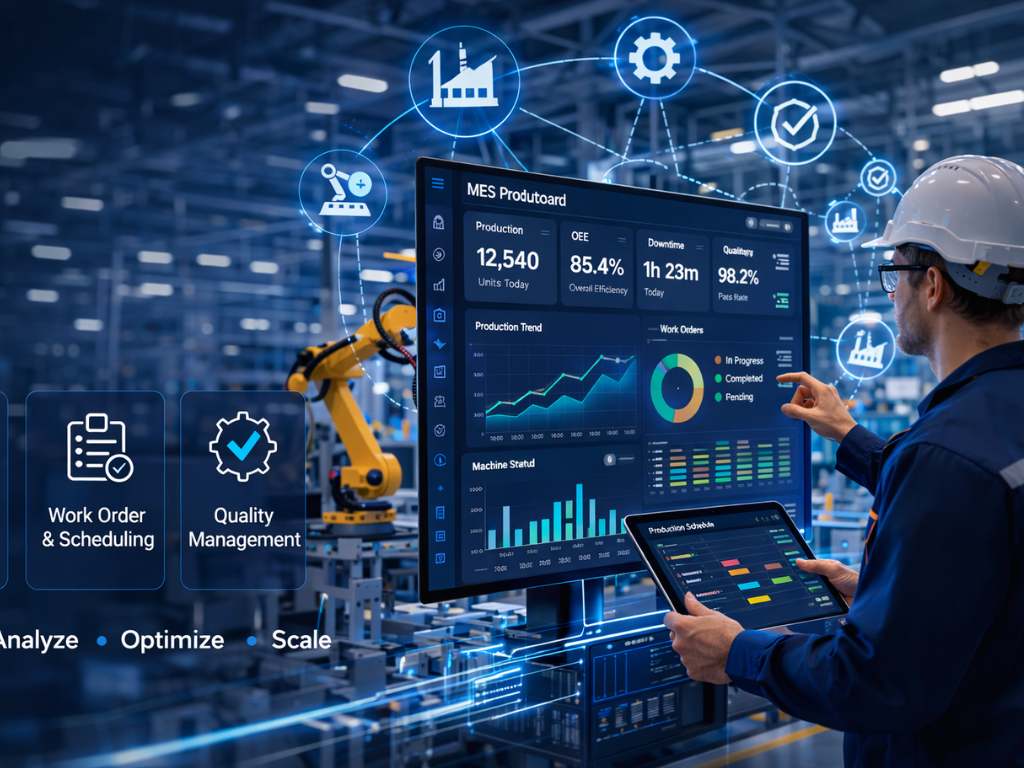
Manufacturing MES software, often referred to as a manufacturing execution system, is a digital solution designed to monitor, control, and optimize production processes on the shop floor in real time. It acts as a critical link between enterprise-level systems, such as ERP, and the physical manufacturing environment where production actually takes place.
In essence, MES focuses on execution rather than planning. While ERP systems handle business operations like inventory, finance, and scheduling, MES ensures that these plans are carried out efficiently on the factory floor. It captures real-time data from machines, operators, and production lines, providing accurate insights into what is happening at every stage of the process.
Moreover, manufacturing MES software helps standardize workflows, reduce errors, and improve overall operational visibility. By delivering real-time updates and actionable insights, it enables manufacturers to make quicker decisions and maintain consistent product quality. As a result, organizations can achieve better control over production while adapting more easily to changing demands.
How Manufacturing MES Software Works
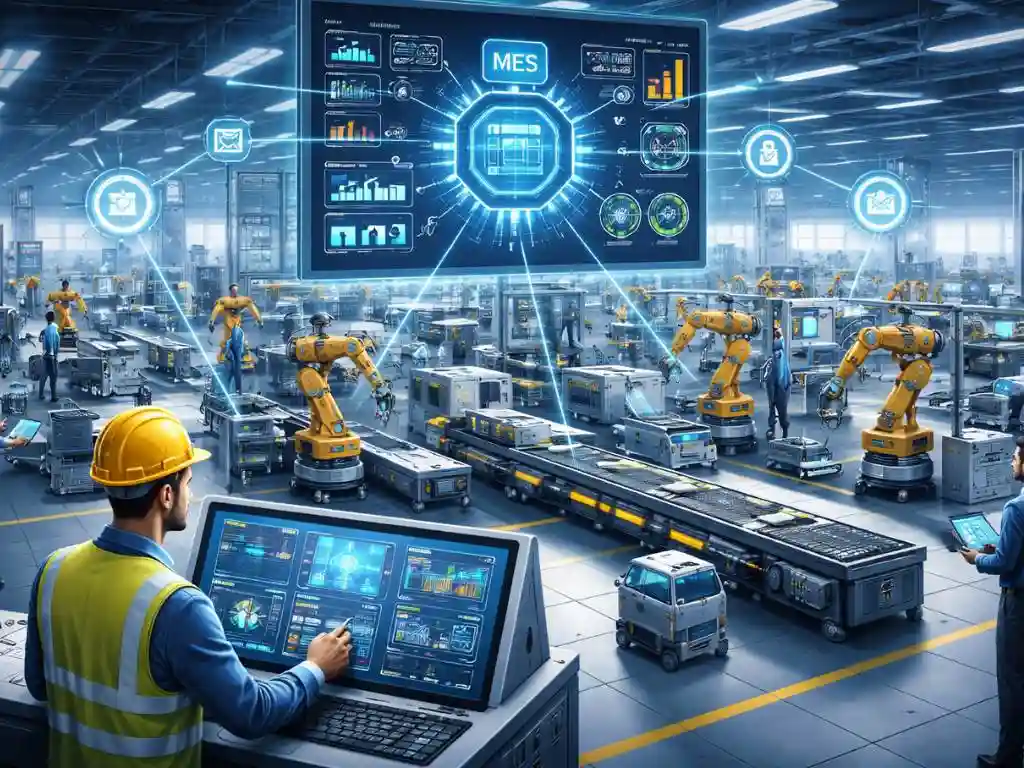
To better understand its role in modern production, it is important to look at how manufacturing MES software operates within a factory environment. Rather than functioning as a standalone tool, it works as a connected system that continuously collects, processes, and acts on data from the shop floor.
First, the system gathers data from multiple sources, including machines, sensors, and human operators. This data may include production status, machine performance, cycle times, and material usage. Because the information is captured in real time, it provides an accurate and up-to-date view of ongoing operations.
Next, the software processes and analyzes this data to identify patterns, inefficiencies, or potential issues. For instance, it can detect bottlenecks, highlight underperforming equipment, or flag deviations in quality. As a result, manufacturers can address problems before they impact overall productivity.
In addition, manufacturing MES software translates these insights into actionable outcomes. It can trigger alerts, automate workflows, or guide operators with clear instructions to ensure tasks are completed correctly. This not only reduces manual intervention but also improves consistency across production lines.
Furthermore, MES integrates with other systems such as ERP platforms, IoT devices, and legacy tools. This integration ensures that information flows seamlessly across the organization, creating a unified and connected manufacturing ecosystem. Consequently, businesses gain greater control, improved efficiency, and enhanced decision-making capabilities throughout the production process.
Key Features of Manufacturing MES Software
In addition to enabling real-time control and visibility, manufacturing MES software offers a range of features that help streamline production and improve overall performance. These capabilities are designed to address common manufacturing challenges while supporting consistent and efficient operations.
First, real-time production tracking allows manufacturers to monitor every stage of the production process. This ensures that any delays or issues can be identified and resolved quickly. As a result, businesses can maintain better control over timelines and output.
Moreover, quality management features help enforce standardized processes and ensure products meet required specifications. By detecting defects early and maintaining compliance, manufacturers can reduce rework and improve customer satisfaction.
Another important capability is inventory and material tracking. This feature provides accurate information about material usage and availability, helping to minimize waste and prevent shortages. Consequently, production planning becomes more reliable and cost-effective.
In addition, performance analytics and reporting tools transform raw data into meaningful insights. These insights enable manufacturers to evaluate efficiency, identify trends, and make informed decisions for continuous improvement.
Workforce management is also a key component, as it helps track operator performance, allocate tasks efficiently, and ensure proper utilization of labor resources. This leads to improved productivity and smoother operations.
Finally, manufacturing MES software supports seamless system integration. By connecting with ERP systems, IoT devices, and other digital tools, it creates a unified environment where data flows effortlessly across all levels of the organization. As a result, manufacturers can achieve greater coordination and operational efficiency.
What Is Digital Transformation in Manufacturing?
Digital transformation in manufacturing refers to the adoption of advanced digital technologies to improve how production processes are managed, monitored, and optimized. Rather than relying on manual methods and disconnected systems, manufacturers are shifting toward integrated, data-driven operations that enable greater efficiency and flexibility.
At its core, this transformation involves connecting machines, systems, and people to create a more intelligent and responsive production environment. For example, technologies such as IoT, automation, and cloud computing allow manufacturers to collect and analyze data in real time. As a result, they can move from reactive decision-making to a more proactive and predictive approach.
With this in mind, modern manufacturing is evolving into what is often called a “smart factory.” In such environments, processes are automated, systems communicate seamlessly, and insights are generated continuously. This not only improves productivity but also enhances quality, reduces costs, and supports faster innovation.
Furthermore, digital transformation enables manufacturers to adapt quickly to changing market demands. Whether it is scaling production, customizing products, or improving supply chain visibility, digital tools provide the agility needed to stay competitive. Consequently, organizations that embrace this shift are better positioned for long-term growth and operational excellence.
How Manufacturing MES Software Enables Digital Transformation
Manufacturing MES software plays a central role in helping organizations transition from traditional production methods to fully digital, connected operations. By providing real-time insights, improving coordination, and enabling smarter decision-making, it acts as a foundation for successful digital transformation.
Enhances Real-Time Visibility
One of the most significant advantages is real-time visibility across the entire production process. Manufacturers can monitor machine performance, track production progress, and identify issues instantly. As a result, they can respond quickly to disruptions and maintain smooth operations.
Improves Operational Efficiency
In addition, manufacturing MES software helps streamline workflows by identifying inefficiencies and bottlenecks. It enables better resource allocation, reduces downtime, and ensures that production runs as planned. Consequently, overall efficiency and output are significantly improved.
Enables Data-Driven Decisions
With access to accurate and centralized data, manufacturers can move away from guesswork and rely on insights to guide their decisions. This not only improves planning but also supports continuous improvement initiatives. As a result, businesses can optimize processes and achieve better outcomes over time.
Supports Integration Across Systems
Furthermore, MES connects various systems, including ERP platforms, IoT devices, and legacy software. This seamless integration ensures that data flows consistently across all levels of the organization. In turn, it creates a unified digital ecosystem that enhances collaboration and transparency.
Strengthens Quality and Compliance
Another key benefit is improved quality control. Manufacturing MES software standardizes processes, automates quality checks, and ensures compliance with industry regulations. Therefore, manufacturers can maintain high product standards while reducing errors and rework.
As a result, organizations that implement MES are better equipped to embrace digital transformation. They gain greater control over operations, improve efficiency, and build a more agile and future-ready manufacturing environment.
Benefits of Implementing Manufacturing MES Software
Implementing manufacturing MES software delivers a wide range of benefits that directly impact productivity, cost efficiency, and overall operational performance. As manufacturers continue to embrace digital technologies, these advantages become even more critical for maintaining a competitive edge.
First, it significantly increases productivity by providing real-time insights into production processes. With better visibility, managers can quickly identify delays, optimize workflows, and ensure that operations run smoothly. As a result, output improves without compromising quality.
In addition, manufacturing MES software helps reduce operational costs. By minimizing downtime, preventing errors, and optimizing resource usage, it eliminates unnecessary expenses. Consequently, manufacturers can achieve higher efficiency while maintaining better cost control.
Another key benefit is improved product quality. Through continuous monitoring and standardized processes, MES ensures consistency across production lines. This reduces defects, lowers rework rates, and enhances customer satisfaction.
Moreover, it enhances traceability by tracking every stage of the production cycle. This makes it easier to identify the source of issues, maintain compliance, and ensure accountability. As a result, manufacturers can respond more effectively to quality concerns and regulatory requirements.
Furthermore, faster time-to-market is achieved through streamlined operations and better coordination between systems. By reducing delays and improving planning accuracy, manufacturers can deliver products more quickly and efficiently.
Ultimately, manufacturing MES software empowers businesses to operate more intelligently, reduce risks, and drive sustainable growth in an increasingly competitive manufacturing landscape.
Real-World Use Cases Across Industries
Manufacturing MES software is not limited to a single sector; instead, it is widely used across various industries to address specific operational challenges and improve overall efficiency. By adapting to different production environments, it delivers measurable value in both complex and high-volume manufacturing settings.
For example, in the automotive industry, MES helps manage complex production lines with multiple components and processes. It ensures precise coordination, reduces assembly errors, and improves overall production efficiency. As a result, manufacturers can maintain high standards while meeting strict delivery timelines.
Similarly, in the food and beverage sector, MES plays a critical role in maintaining quality and compliance. It tracks ingredients, monitors production conditions, and ensures adherence to safety regulations. Consequently, manufacturers can guarantee product consistency while reducing the risk of contamination or recalls.
In the pharmaceutical industry, where regulatory requirements are extremely strict, MES ensures full traceability and documentation. It helps maintain compliance with industry standards while minimizing human error. This not only improves product quality but also simplifies audits and reporting प्रक्रesses.
Additionally, electronics manufacturing benefits from MES by enabling precision and detailed tracking of components. It supports high-speed production while ensuring accuracy and reducing defects. As a result, manufacturers can deliver reliable products in a highly competitive market.
Overall, manufacturing MES software adapts to the unique needs of each industry, providing tailored solutions that enhance efficiency, improve quality, and support digital transformation across diverse manufacturing environments.
Common Challenges and How to Overcome Them
While manufacturing MES software offers significant advantages, its implementation can come with certain challenges. However, with the right approach and planning, these obstacles can be effectively managed and even turned into opportunities for improvement.
One common challenge is integrating MES with legacy systems. Many manufacturers still rely on older infrastructure that may not easily connect with modern technologies. However, this can be addressed by choosing flexible MES solutions that support APIs and scalable integration methods. As a result, businesses can gradually modernize without disrupting existing operations.
Another challenge is employee resistance to change. Since MES introduces new workflows and technologies, teams may initially struggle to adapt. To overcome this, organizations should invest in proper training and change management strategies. In doing so, employees become more confident and productive when using the system.
In addition, the initial investment required for implementation can be a concern for many businesses. However, focusing on long-term benefits such as improved efficiency, reduced downtime, and lower operational costs can help justify the expense. Consequently, the return on investment becomes clear over time.
Data accuracy and system configuration can also pose challenges during the early stages. If data inputs are inconsistent or poorly managed, the effectiveness of MES may be reduced. Therefore, it is essential to establish clear data standards and ensure proper system setup from the beginning.
Ultimately, while these challenges are real, they are manageable. With careful planning, the right technology partner, and a structured implementation strategy, manufacturers can successfully adopt MES and unlock its full potential.
Best Practices for Successful MES Implementation
To maximize the value of manufacturing MES software, it is essential to follow a structured and strategic implementation approach. While the technology itself is powerful, success largely depends on how well it is planned, deployed, and adopted across the organization.
First, manufacturers should start with clearly defined objectives. Identifying specific goals—such as improving efficiency, reducing downtime, or enhancing quality—helps ensure that the implementation aligns with business priorities. As a result, it becomes easier to measure success and track performance improvements.
In addition, choosing the right solution is critical. Not all MES platforms are the same, so it is important to select one that fits the organization’s size, industry requirements, and future scalability needs. This ensures that the system can grow alongside the business without requiring major changes later.
Moreover, investing in employee training is key to successful adoption. Since MES introduces new processes and tools, providing hands-on training and ongoing support helps employees feel confident and capable. Consequently, this reduces resistance and improves overall system utilization.
Another important practice is ensuring seamless integration with existing systems such as ERP, IoT devices, and other operational tools. A well-integrated environment allows data to flow smoothly, eliminating silos and improving decision-making across departments.
Finally, manufacturers should adopt a phased implementation approach rather than deploying everything at once. By starting with a pilot project or specific production area, they can identify potential issues early and make necessary adjustments. This not only reduces risk but also ensures a smoother transition to full-scale deployment.
By following these best practices, organizations can successfully implement manufacturing MES software and fully leverage its capabilities to drive efficiency, quality, and long-term growth.
Future Trends in Manufacturing MES Software
As manufacturing continues to evolve, manufacturing MES software is also advancing to meet the demands of smarter, more connected production environments. Emerging technologies and changing industry needs are shaping the future of MES, making it more powerful, flexible, and intelligent.
One of the most significant trends is the integration of artificial intelligence and machine learning. These technologies enable MES to move beyond real-time monitoring and into predictive capabilities. For instance, manufacturers can anticipate equipment failures, optimize maintenance schedules, and improve production planning. As a result, downtime is reduced and efficiency is enhanced.
Another important development is the rise of cloud-based MES solutions. Unlike traditional on-premise systems, cloud platforms offer greater scalability, flexibility, and remote accessibility. Consequently, manufacturers can manage operations across multiple locations while reducing infrastructure costs and improving system updates.
In addition, the growing use of IoT devices is transforming how data is collected and utilized. With more connected machines and sensors, MES can capture detailed, real-time information from every part of the production process. This leads to better visibility, faster insights, and more accurate decision-making.
Furthermore, there is an increasing focus on user-friendly interfaces and mobile accessibility. Modern MES platforms are designed to be intuitive and easy to use, allowing operators and managers to access critical information anytime, anywhere. This improves collaboration and ensures quicker responses to operational issues.
Looking ahead, manufacturing MES software will continue to play a vital role in digital transformation. By embracing these trends, manufacturers can build more agile, efficient, and future-ready operations that are well-equipped to handle evolving market demands.
Frequently Asked Questions
What is manufacturing MES software in simple terms?
Manufacturing MES software is a system that helps monitor, track, and control production processes in real time. It connects machines, operators, and business systems to ensure efficient and accurate manufacturing operations.
How is MES different from ERP?
While ERP systems focus on planning, finance, and resource management, MES focuses on executing production on the shop floor. In other words, ERP plans what should happen, whereas MES ensures it happens efficiently.
Why is manufacturing MES software important for digital transformation?
It plays a key role by providing real-time data, improving visibility, and enabling better decision-making. As a result, manufacturers can move toward automated, connected, and data-driven operations.
What industries benefit from MES software?
MES is widely used across industries such as automotive, pharmaceuticals, food and beverage, and electronics. Each sector uses it to improve efficiency, maintain quality, and ensure compliance.
Can small manufacturers use MES software?
Yes, many modern MES solutions are scalable and suitable for small and mid-sized manufacturers. Cloud-based options, in particular, make it easier to adopt without heavy infrastructure investment.
What are the key benefits of using MES?
Some major benefits include improved productivity, reduced downtime, better quality control, enhanced traceability, and faster time-to-market.
Is MES difficult to implement?
Implementation can be complex, especially when integrating with legacy systems. However, with proper planning, the right technology partner, and a phased approach, it can be successfully managed.
Does MES support real-time decision-making?
Yes, one of the main advantages of manufacturing MES software is real-time visibility. It provides instant insights into production, allowing managers to make quick and informed decisions.
How does MES improve product quality?
MES standardizes processes, tracks production data, and performs automated quality checks. This helps reduce errors, detect defects early, and maintain consistent product standards.
What is the future of manufacturing MES software?
The future includes advancements such as AI integration, cloud-based platforms, and increased use of IoT. These innovations will make MES more intelligent, scalable, and essential for smart manufacturing.
Conclusion: Driving the Future of Manufacturing
In conclusion, manufacturing MES software has become a vital component in the journey toward digital transformation. By connecting shop floor operations with enterprise systems, it provides real-time visibility, improves efficiency, and enables more informed decision-making. As manufacturing environments grow increasingly complex, having a system that ensures control, accuracy, and consistency is more important than ever.
Moreover, the ability to streamline workflows, enhance product quality, and reduce operational costs makes MES a strategic investment for modern manufacturers. It not only addresses current production challenges but also prepares businesses for future advancements in automation, data analytics, and connected technologies.
As a result, organizations that adopt manufacturing MES software are better positioned to build agile, resilient, and scalable operations. In a competitive and rapidly evolving industry, leveraging the right digital tools can make all the difference. Ultimately, MES serves as a foundation for smarter manufacturing, helping businesses achieve sustainable growth and long-term success.